How to Safely Get Rid of Junk Vehicles Without Paperwork
Got a junk motorcycle or vehicle with no title? Learn key steps to remove it safely and legally before you call a hauler.
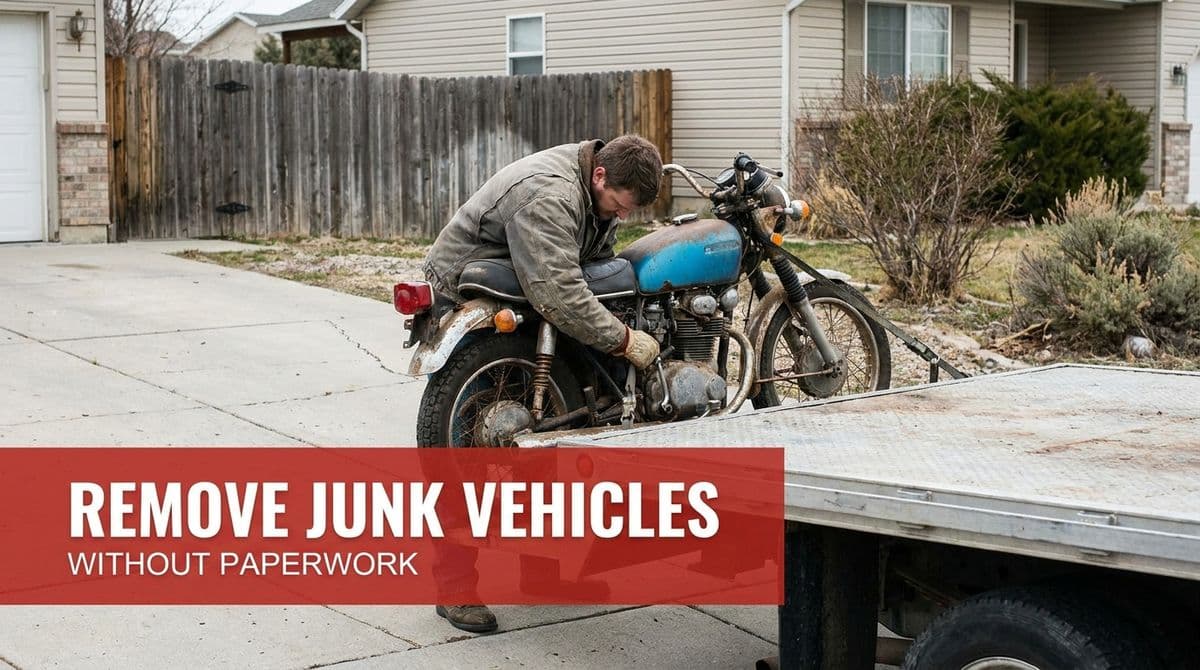
When a Homeowner Has Junk Motorcycles and No Paperwork
We recently got a call from a homeowner – let’s call him Mark – who had two junk motorcycles sitting in his side yard. One was a Honda, the other a Suzuki. Both had been in crashes, pushed aside, left outside, and slowly turned into rusted heaps.
Mark’s big concern wasn’t just getting them out of the way. His question was, “I don’t have any paperwork or titles on these. Can you still haul them, and is it going to cause problems when you dispose of them?”
That’s a smart question, because getting rid of junk motorcycles or vehicles without paperwork does come with a few extra steps. In Mark’s case, we walked him through exactly what we needed before we could legally haul and dispose of them. I’ll share that same guidance with you here.
Why Paperwork Matters When You Scrap a Vehicle
Anytime we haul away a vehicle, even a wrecked one that’s clearly scrap, we have to think about what happens next – at the yard, with the DMV, and with any law enforcement checks.
Without proper paperwork, a junk vehicle can raise red flags, including:
- Ownership questions – yards and recyclers want proof the person authorizing removal has the right to do so.
- Possible stolen status – vehicles and motorcycles are often checked against databases by VIN.
- Title and lien issues – if there’s a bank lien or an old title still active, it can delay or block disposal.
That’s why, when Mark said, “I don’t have any papers on them,” my first reaction was to explain what we’d need to see before we could promise a clean, legal haul.
Step 1: Gather Basic Info Before You Call a Hauler
You may not have titles in hand, but there’s often still useful information right on the vehicle or in your own records. Here’s what we always recommend homeowners track down first:
- VIN (Vehicle Identification Number) – usually stamped on the frame or steering neck on motorcycles; on vehicles it’s visible through the windshield or on the door jamb.
- Make, model, and approximate year – for example, “older Honda street bike” or “early-2000s Suzuki sedan.”
- Current condition – does it have the engine, transmission, wheels, and key components, or is it partially stripped?
With Mark, we asked about the engines specifically: “Do they still have the engines and main parts, or are they just frames?” That matters because it affects both the scrap value and how the disposal yard will classify them.
Step 2: Take Clear Photos of Your Junk Vehicle
Since Mark didn’t have pictures handy during the call, we asked him to snap some and send them over so we could give a more accurate quote and make sure we wouldn’t hit any snags at the yard.
If you’re in a similar situation, here’s what to photograph:
- Full shots from all four sides – so we can see body damage, missing parts, and general condition.
- Close-ups of the VIN plate or sticker – if it’s still readable.
- Interior and engine area – especially on cars and trucks; for bikes, a good shot of the engine and controls.
Good photos help us answer two key questions: Can we safely haul it with our equipment, and will the receiving yard accept it without additional documentation?
Step 3: Check Your Local Rules on Junk Vehicles
Every area has its own rules about titles, junking procedures, and abandoned vehicles. Before you schedule a pickup, it’s smart to:
- Check your state DMV website for “junk vehicle” or “salvage” guidelines.
- See if you can request a replacement title or a junk certificate if you’re the last registered owner.
- Confirm any local ordinances about storing or removing inoperable vehicles on private property.
If you can show that you’re the last known owner or have some paperwork tying you to the vehicle (an old registration, insurance card, or bill of sale), it often makes disposal much smoother, even if the original title is long gone.
Step 4: Work With a Hauler Who Understands Disposal Rules
When Mark called, we were upfront: we didn’t want to “run into issues when we go and dispose of it.” That’s exactly how we put it, because a hauler’s job is not just to toss something on a truck – it’s to make sure it can be properly processed at the end of the line.
When you talk to any junk removal or towing company, ask them:
- Do you handle vehicles and motorcycles without titles?
- What documents do you require from me before pickup?
- Where do you take junk vehicles for disposal? (salvage yard, recycler, etc.)
- Do I need to sign any forms or releases?
A reputable company will explain their process clearly and may ask for photos and ID. If someone says, “No paperwork needed, no questions asked,” that can be a red flag.
Step 5: Protect Yourself From Future Headaches
Once your junk motorcycle or vehicle is gone, you don’t want it coming back to haunt you in the form of tickets, fees, or questions from the DMV.
Before and after removal, we recommend you:
- Remove license plates (if any are still on the vehicle).
- Take a few final photos showing the condition and the hauler loading it.
- Get a receipt or written acknowledgement from the hauler describing what was taken and when.
- Follow your state’s process for notifying the DMV that the vehicle has been junked or disposed of, if required.
In Mark’s case, once we had photos and basic info, we could tell him exactly what we needed from him, what we’d handle on our end, and what to expect from the disposal yard. That same preparation can make your own junk vehicle removal smooth and stress-free, even when the paperwork has long since disappeared.
Thinking About Getting Rid of a Junk Bike or Vehicle?
If you’ve got an old motorcycle, car, or truck rusting away on your property and you’re missing the title, don’t wait until it becomes an eyesore or a code issue. Start by gathering the basics: VIN, photos, and any old documents you can find.
Then reach out to a company that’s familiar with junk vehicle rules in your area. With the right information up front, you can get that metal heap off your property safely, legally, and with a lot less hassle than you might think.