How We Repurpose, Donate & Recycle Your Junk
Learn how our junk removal team repurposes, donates, and recycles your unwanted items so the landfill is always the last resort.
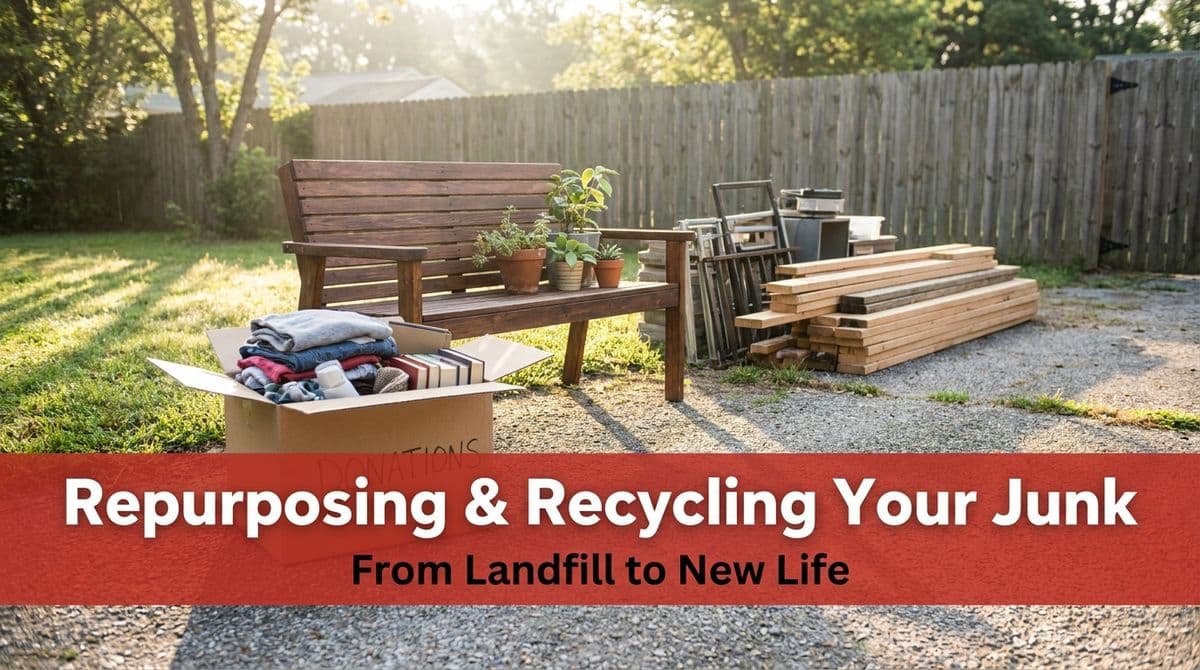
How We Keep Your “Junk” Out of the Landfill
We recently got a call from a customer — let’s call her Carol — who lives in an apartment near Glendale. She told us, “The wood is good, the items are still usable… I just don’t need them anymore. I really don’t want this stuff going straight to a landfill. Can you repurpose or reuse it?”
That’s a question we love to hear, because it’s exactly how we run our business. At Junk Solutions, the landfill is always our last resort. Carol’s call is a perfect example of how we look at “junk” differently — as something that can often be repurposed, donated, or recycled.
How Our Junk Removal Service Works (And What It Costs)
On the phone, Carol first wanted to understand the basics: “What kind of service do you offer, and what’s the price range?”
Here’s how we explained it to her:
- Full-service removal: You point at what you want gone, and we load it into our truck. No dragging items to the curb, no heavy lifting for you.
- Truck-based pricing: We charge based on how much space your items take up in our dump truck (about 10 ft x 5 ft x 8 ft). You only pay for the portion of the truck you use.
- Starting price: Our minimum load starts at $187. That typically covers a mattress, its box spring, and the small metal frame — or one large appliance like a fridge, stove, washer, or dryer.
- Senior discounts: Just like we told Carol, we offer a 10% discount for seniors.
From there, the price goes up as the truck fills up. But that’s just the removal side. What most people really want to know is: what happens to my stuff after it leaves my home?
Our Priority Order: Repurpose → Donate → Recycle → Landfill
While we were talking, Carol mentioned she had some solid wood pieces that “could be repurposed or used in other ways.” That’s exactly the kind of thing we look for on every job.
Behind the scenes, we follow a simple decision tree for every load we take:
1. Repurposing and Reuse
First, we ask: Can this be used again as-is or with minor repairs?
- Solid wood furniture: Tables, dressers, shelves, and headboards with good structure can often be refinished, painted, or turned into workbenches, storage, or craft pieces.
- Lumber and building materials: Good wood, doors, cabinets, and hardware often find their way to local builders, DIYers, or community projects.
- Outdoor items: Benches, planters, and patio furniture can often be cleaned up and reused.
We set these items aside right at the truck, so they never mix with true trash. When possible, we funnel them to people or organizations that can give them a second life.
2. Donation to Local Charities
If something is still in decent, usable condition, the next question is: Would someone else be happy to have this?
Common donation candidates include:
- Gently used couches and chairs (no major rips, stains, or odors)
- Dining sets with all or most chairs present
- Small household items, décor, and kitchenware
- Working small appliances and electronics
We work with local donation centers and charities that accept furniture, housewares, and sometimes building materials. Each organization has its own rules, so we pre-sort items to match their guidelines and maximize what gets accepted instead of turned away.
3. Recycling Metals, Appliances, and More
For items that aren’t donation-ready but have recyclable materials, we head to recycling centers instead of the dump. Here’s what typically makes the cut:
- Metals: Bed frames, metal shelving, exercise equipment, grills (without propane tanks), and other metal-heavy items.
- Appliances: Fridges, stoves, washers, dryers, and dishwashers are usually processed for metal and components once we drop them at the proper facility.
- Electronics: Some TVs, monitors, and e-waste can go to specialized recyclers, depending on local rules and the item’s condition.
We separate these out because even if they look like junk, there’s a lot of recoverable material that doesn’t need to end up in a landfill.
4. Landfill as a Last Resort
As we told Carol, the landfill is only used when there’s no safe or legal alternative. Items that are broken beyond repair, heavily contaminated, or simply non-recyclable will go to the dump after we’ve exhausted other options.
How We Decide: Donation vs. Recycling
Carol was especially interested in how we decide what gets donated versus recycled. Here are the main factors we consider on every job:
- Condition: Is it structurally sound? Torn, stained, moldy, or infested items can’t be donated and often can’t be recycled.
- Demand: Some items (like old box TVs or massive entertainment centers) just aren’t wanted by most charities, even if they still function.
- Safety and compliance: Items with certain chemicals, damage, or missing safety parts may need to be recycled or disposed of instead of reused.
- Material type: Solid metal or metal-heavy items are strong candidates for recycling, even if they’re not pretty.
We make these calls on-site, so when we load your items, we’re already planning which facility or organization they’re headed to.
What You Can Do Before Pickup to Help
If, like Carol, you care about keeping items out of the landfill, there are a few simple steps you can take before we arrive:
- Group similar items: Keep wood pieces together, metal together, and electronics in one area. It makes sorting for donation and recycling faster.
- Keep items dry: Water-damaged furniture is very hard to donate or repurpose.
- Remove obvious trash: Toss food waste, loose garbage, and soiled items separately so reusable pieces don’t get contaminated.
- Set aside what matters most: If you really hope a certain piece will be donated or repurposed, show it to our crew first so we can give it special attention.
Items We Typically Can’t Take
Another common question we get — and one Carol hinted at — is whether there are things we legally can’t haul away or repurpose. While rules vary by area, here are examples of items we usually cannot take:
- Certain hazardous materials (paint, solvents, fuels, some chemicals)
- Large quantities of construction debris with asbestos or other regulated materials
- Medical waste or biohazardous materials
- Propane tanks and some pressurized cylinders
If you’re unsure about a specific item, just ask when you call. We’ll either tell you how we can help or point you to the right local resource.
Serving Glendale and Beyond, With a Lighter Footprint
At the end of our conversation, Carol wanted to double-check that we serve the Glendale area — we assured her we do, along with most of SoCal (just not down to San Diego). Whether we’re clearing out one fridge or a full apartment, our goal is always the same: remove the stress for you and keep as much as possible out of the landfill.
If you’ve got items that still have life left in them — especially good wood, solid furniture, or working appliances — we’re ready to do the heavy lifting and make sure they’re handled responsibly, not just tossed away.