How Junk Removal Pricing Really Works
Confused by junk removal prices? We explain minimum fees, volume-based rates, and how to pack the most value into a single pickup, using a real customer call.
How Junk Removal Pricing Really Works (Using a Real Call)
We recently got a call from a customer — let’s call him Brian — who lives in the Stockton area. Brian had a full-size mattress he needed gone and wanted a quick price. When we shared our minimum fee, his next question was the same one we hear almost every day:
“So how much can I add for that price? Can I throw in a dining table, a computer desk, a couple of desks… does the $187 cover all that?”
That call was a perfect example of how confusing junk removal pricing can seem from the outside. We walked Brian through how our volume-based pricing and minimum fees work, and we thought it would be helpful to share that explanation here so you can get the most value from a single pickup, too.
Why There’s a Minimum Fee (Even for Just One Item)
When Brian asked what it would cost to remove a single full-size mattress, we told him our current minimum: $187. That minimum covers a mattress, or a box spring, or a single piece of furniture or appliance. Understandably, his reaction was, “So that’s for a full truck, right?”
We explained that the minimum is not for a full truck. It’s the lowest price we can charge to send a truck and crew out to your home. That minimum has to cover:
- Our crew’s time and wages
- Truck fuel and maintenance
- Insurance and licensing
- Dump and recycling fees
Whether we haul one mattress or half a truck of small items, we still have to send the same truck and at least two team members, and we still pay disposal fees. That’s why there’s a floor below which we simply can’t operate sustainably.
What Usually Fits Into the Minimum Charge
Here’s where we were able to give Brian some good news. We told him that our minimum fee usually covers more than just one small item. The classic example we gave him is a typical bedroom setup:
- 1 mattress
- 1 box spring
- 1 small metal bed frame
In most cases, all of that fits within our minimum price because those items don’t take up a large percentage of the truck. Once you start adding bulkier items — like dressers, big sofas, or multiple desks — the price begins to move up to the next volume tier.
So if you only have one bulky item, the minimum may feel high. But if you gather a handful of smaller items or a natural set (like a mattress, box spring, and frame), you can usually get much better value out of that same minimum fee.
How Volume-Based Pricing Actually Works
After we covered the minimum, Brian asked the big question: “What’s the maximum amount of items I can put in for $187?” That’s where volume-based pricing comes in.
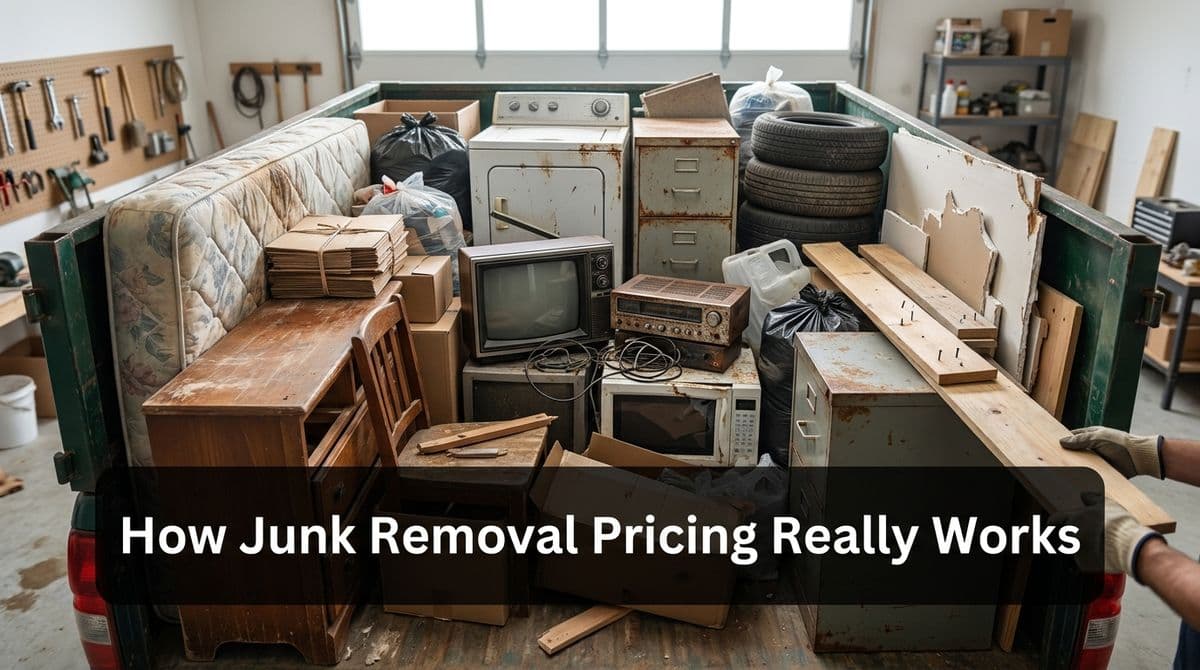
We explained that we don’t charge by the number of items. We charge based on how much space your items take up in our truck. Think of it like this:
- The truck is divided (mentally) into sections: 1/8, 1/4, 1/2, 3/4, and full loads.
- Your price depends on what fraction of the truck your junk fills.
- The minimum fee usually corresponds to a small fraction of the truck (often around 1/8 or so, depending on your local pricing chart).
So instead of asking, “How many items can we cram in for $187?” it’s more accurate to ask, “How much of the truck can we fill for that minimum tier?” A dining table, a computer desk, and a couple of smaller desks might fit within the same tier as a mattress setup — or they might bump the load to the next size, depending on their dimensions.
How to Get the Most Value From One Pickup
When we’re on the phone with someone like Brian, we always try to help them maximize the value of their appointment. Here’s the advice we shared with him, and that we’d share with you:
1. Make a “junk list” before you call
Walk through your home, garage, and yard and write down everything you might want gone: old chairs, broken patio furniture, boxes you’ll never unpack, that busted lawnmower, etc. When you call us with a more complete list, we can give you a much clearer estimate and help you understand which volume tier you’re likely to land in.
2. Group similar items together
Many customers call us for a single mattress, then realize they also have a box spring, frame, old nightstand, and a broken lamp. Those smaller items often tuck into the same truck space as the bigger ones. By adding them, you’re getting more clutter removed for roughly the same cost tier, instead of paying the minimum multiple times on different days.
3. Be honest about size and quantity
We don’t expect exact measurements, but rough descriptions help us a lot. There’s a big difference between:
- “A small computer desk and a light dining table”
- Versus “A solid oak 8-seat dining table and two huge executive desks”
The more accurately you describe items, the better we can estimate which volume tier you’ll be in and what kind of value you can expect from that visit.
Common Situations That Can Affect the Final Price
For most standard pickups, volume and the minimum fee are the main factors. There are a few situations, though, where pricing can be a bit different. When we talk with customers on the phone, we always ask about these so there are no surprises:
Stairs and tricky access
If items are on a higher floor with no elevator, down steep stairs, or in a very tight space that requires extra labor, it can sometimes affect the overall cost or time window. Let us know if we’ll be navigating a lot of stairs so we can plan properly.
Very heavy or oversized items
Things like pianos, large safes, or extremely heavy solid-wood furniture can require additional crew or special equipment. These items usually still follow volume pricing, but the labor factor can influence the total.
Special disposal items
Some materials have higher dump or recycling fees — for example, certain electronics, old TVs, or items with refrigerants. We’re upfront about these costs and will tell you in advance if anything you mention falls into a special category.
What to Expect When You Call Us
When someone like Brian calls, here’s how we typically handle it:
- We confirm your area (like we did with Stockton).
- You tell us what you have — start with the big items, then add the smaller things you might want gone.
- We explain the minimum and volume tiers, giving you a ballpark range based on your description.
- We schedule a time that works for you — many people, like Brian, prefer weekends or their one day off.
- The crew gives an on-site, no-obligation quote before loading anything. If you approve, we get to work right then.
Our goal is always to make sure you understand why the price is what it is, and how to get the most out of that single truck visit.
Ready to Clear Some Space?
If you’re staring at a single mattress like Brian was, we encourage you to take 10 minutes to look around for a few more items you’re ready to let go of. With a little planning, you can turn a simple mattress pickup into a major clutter cleanout — all within a fair, transparent volume-based price.
When you’re ready, give us a call, tell us what you’ve got, and we’ll walk you through the best way to make that one pickup count.