Furniture & Mattress Removal Costs When Moving Out
Moving out and need old furniture or mattresses gone? Learn how junk removal pricing works, what “truck space” means, and how to get accurate quotes before moving day.
Planning a Move-Out? Don’t Forget Furniture & Mattress Removal Costs
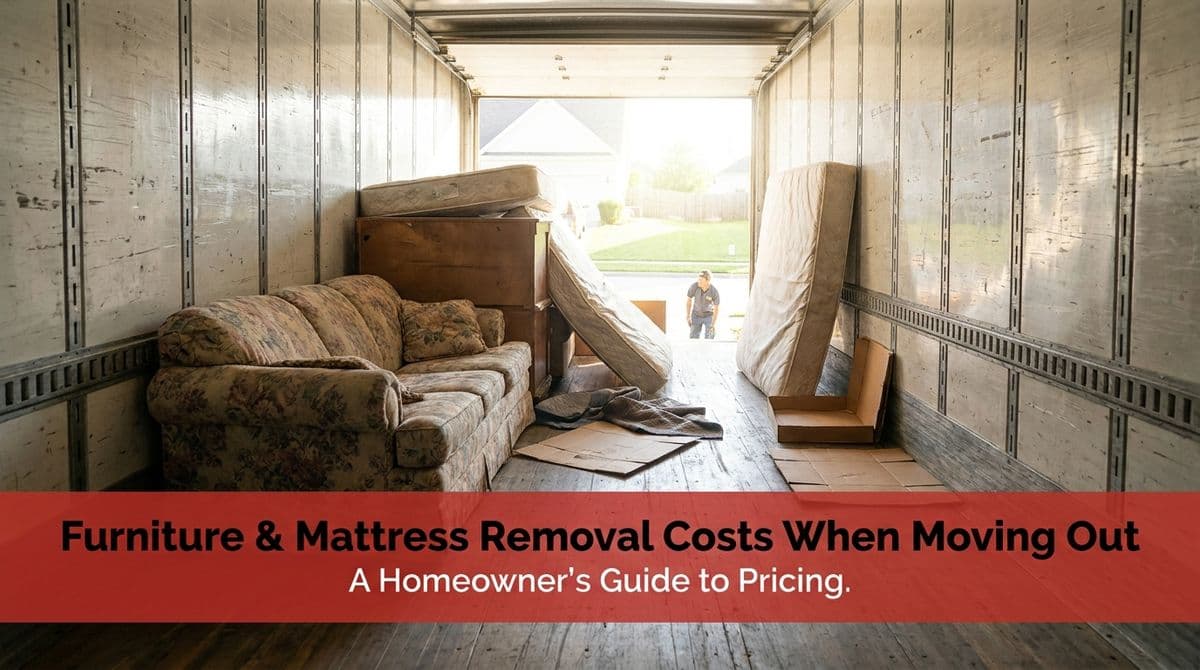
We recently got a call from a customer — let’s call her Sara — who was moving out of her place in La Palma. She had already booked her movers and packed her boxes, but there were a few big items she didn’t want to take with her: two queen mattresses, one California king mattress, two three-seater couches, and two single armchairs.
Her question for us was simple: “How much is this going to cost?” But as we explained to Sara, furniture and mattress removal pricing depends on a few key factors: item count, size, how much truck space everything takes, and how we can access it on pickup day.
In this guide, we’ll walk through how pricing usually works, what “truck space” really means, and how to get an accurate quote before moving day so you’re not stuck with surprise costs — or worse, stuck with old furniture when your lease ends.
What We Told Sara About Our Pricing Basics
When Sara called, we started with our minimum pickup price. For us, that’s $187, which typically covers a small load — something like:
- One mattress with box spring and a light frame, or
- One small appliance (like a compact fridge or a washer/dryer)
From there, the price goes up based on how much space your items take up in our truck. That’s the key thing most homeowners don’t realize at first: junk removal is almost always based on volume, not just the number of items.
For the mix of items Sara described, we gave her a rough range over the phone: about $267 to $717, depending on how everything actually fit in the truck once we saw it in person.
Why Companies Talk About “Truck Space” Instead of Per-Item Prices
We get asked a lot, “Can’t you just tell us how much per mattress or per couch?” We wish it were that simple, but here’s why we (and most reputable junk removal companies) price by truck space instead:
- Size and bulk vary a lot. A slim IKEA dresser and a solid wood dresser are both “one dresser,” but they don’t take the same space or effort.
- We pack the truck strategically. If we can stack and nest items tightly, you may use less truck space (and pay less) than you expect.
- Disposal fees are tied to volume and weight. Landfills and recycling centers often charge us by load size, not by item type.
So instead of saying, “It’s $X per mattress and $Y per couch,” we quote based on what fraction of the truck your load uses — for example, 1/8, 1/4, 1/2, or a full truckload.
A Real-World Example: Pricing Out Mattresses & Couches
Let’s go back to what Sara had:
- Two queen mattresses
- One California king mattress
- Two three-seater couches
- Two single armchairs
Without seeing them, we walked her through a reasonable estimate range:
- Lower end of the range (around $267): if the items are standard size, easy to access, and we can stack and stand the mattresses on edge and nest the chairs efficiently.
- Higher end of the range (up to around $717): if the couches are oversized or very bulky, access is tricky (tight stairways, long carries), or there are extra items added on moving day.
We made sure Sara understood that this was a rough estimate, not a guaranteed price. That honesty is important. We’ve learned the hard way that when we lock in a price sight-unseen, we sometimes arrive to find double the volume that was described. That’s unfair to both sides.
How to Get the Most Accurate Quote Before Pickup
Sara had a smart follow-up question: “How do we know the quote first, just in case it’s too much?” Here’s the process we recommended — and it’s what we suggest for any homeowner getting quotes:
1. Take Clear Photos or a Short Video
Pictures help us a lot. To give you the tightest estimate we can:
- Take wide shots that show all the items together, not just close-ups.
- Include something for scale (a doorway, wall, or person).
- Tell us if anything is extra heavy or disassembles.
With decent photos or a quick video, we can usually give a much narrower price range than we can from a verbal description alone.
2. Be Specific About Access
Access can change the job. When you reach out, let us know:
- Which floor the items are on (ground floor vs. third-floor walk-up)
- How far from the curb or driveway the items are
- If there are tight hallways, stairs, or elevators
The easier it is to get to your items, the faster we can work, and often the better we can pack the truck — which can help keep costs down.
3. Ask for On-Site, No-Obligation Quotes
With Sara, as with many first-time customers, we offered this: we come out, take a look, give an exact price before we lift anything, and if it works for her, we haul it away right then. If it doesn’t, she’s free to decline.
That kind of on-site quote is the only way to know your exact cost before committing, because we can see:
- The true volume of everything combined
- How we’ll fit it into the truck
- Any challenges with stairs, distance, or parking
Timing Your Furniture Pickup on Moving Day
Sara wanted her pickup around 11 a.m. on the same Saturday she was moving. That’s common, but there are a few things we always suggest when you’re lining up junk removal with a move:
- Schedule early. Weekends and end-of-month dates fill up fast, especially in moving season.
- Decide what’s truly going. Walk through your home a week before and make a “haul away” list so you’re not guessing on the phone.
- Leave a little flexibility. A 1–2 hour arrival window (like Sara requested) helps us work around traffic and earlier jobs while still fitting your move timeline.
We also recommended that Sara consider whether any last-minute “extras” might get added — an old desk, some damaged chairs, or random garage items. Letting us know that up front means we can factor it into the estimate and arrive with enough truck space.
Final Tips for Budgeting Furniture & Mattress Removal
If you’re planning a move-out and need furniture or mattress removal, here’s how we’d suggest you budget and compare companies:
- Expect a minimum fee for even a small load.
- Ask how pricing works: Is it based on truck space, weight, or per item?
- Send photos or a video for a tighter estimate range.
- Confirm whether they offer on-site, no-obligation quotes before work starts.
- Ask about any extra fees (stairs, long carries, or special disposal).
When Sara hung up, she told us the information helped her compare us with other companies and build a realistic budget for her move. That’s exactly what we want for every homeowner we talk with: clear expectations, no surprises, and a clean, empty home when you hand over the keys.